Drowsy Driving
Posted by Unknown on Monday, November 8, 2010
People underestimate the dangers of drowsy driving, but driving while fighting the urge to sleep puts everyone on the road at risk. Sadly, a new analysis of National Highway Traffic Safety Administration crash data estimates drowsy driving is a factor in nearly one in six fatal crashes. As recently covered by the Good Morning America, CNN, USA Today, the New York Times and others, the AAA Foundation recently published a study showing that two out of five drivers surveyed (41 percent) admitted to falling asleep behind the wheel at some point. In fact, just recently in Maryland two highway workers were killed by a drowsy driver in the middle of the day.
In recognition of Drowsy Driving Prevention Week®, sponsored by the National Sleep Foundation, the AAA Foundation is calling attention to the serious issue of driving drowsy. Just like drugs and alcohol, sleepiness can impair important functions behind the wheel like response time, awareness and judgment. Many people think they can force themselves to stay awake, but science shows us that isn’t always the case, and dozing off behind the wheel, even for a few seconds, is plenty of time to drive off of the road or over a centerline.
AAA offers some helpful tips from the Foundation’s brochure, How To Avoid Drowsy Driving, include:
• Get plenty of sleep (at least six hours) before a long trip;
• Travel at times when you are normally awake or stay overnight rather than driving;
• Schedule a break every two hours or every 100 miles;
• Stop driving if you become sleepy;
• Do not plan to work all day and then drive all night;
• Drink a caffeinated beverage;
• Avoid driving during sleepy times of day; and
• Travel with an awake passenger
Fish love our new bridge on Mount Baker Highway
Posted by Unknown in culvert, fish, Mount Baker Highway on Friday, November 5, 2010
It didn’t take long for fish to find their way back to Chain-up Creek once the barriers were removed.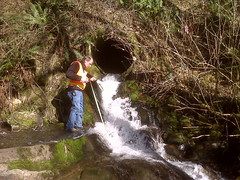
For years, a small concrete culvert and steep drop-off made it nearly impossible for fish to return home.
But a brand new bridge along Mount Baker Highway has revived Chain-up Creek and made the journey home to native habitat easier for spawning fish.
Fish have already been spotted and photographed swimming in the creek only a month after WSDOT completed work on the new bridge and reopened the creek.
During construction, crews were careful to rebuild the creek bed. We strategically placed all the boulders, rocks and logs to mimic and foster the natural flow of a creek. And it’s paying off.
We worked all summer to shift a half-mile stretch of Mount Baker Highway away from the Nooksack River and build the new bridge at Chain-up Creek. We recently opened the new bridge, several miles east of Glacier, to traffic.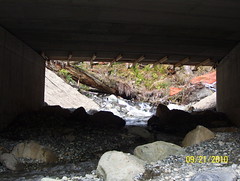 It’s not just the fish who benefit from the new bridge, either. These improvements will make a big difference to drivers and residents in the area. The new bridge and rebuilt creek will reduce the risk of flood damage to the road and reduce the potential for emergency road closures. They should prevent costly emergency repairs and repeated lane closures. It’s a win-win for drivers and the environment.

 |
 |
 |
 |
 |
 |
 |
 |
 |
 |
 |
 |
 |
 |
 |


