I-5 gets smarter on Aug. 10
Posted by Unknown in congestion relief, Smarter Highways on Friday, July 30, 2010
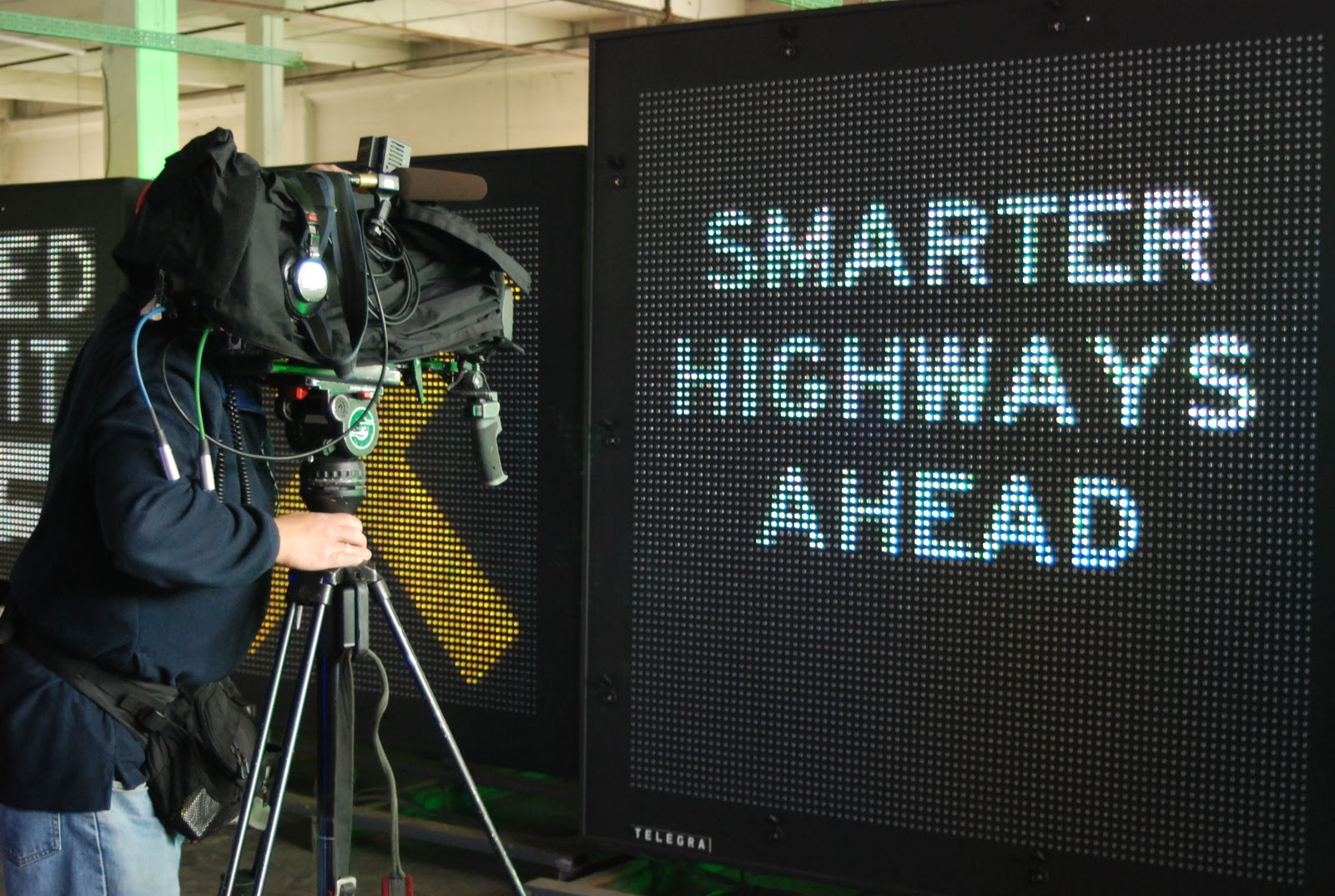
On your mark, get set, get smart. Not Maxwell Smart. We’re talking Smarter Highways.
If you’ve driven northbound I-5 between Boeing Access Road and I-90 recently, you’ve probably noticed a whole bunch of new electronic signs over the freeway. These are our Smarter Highways signs. Since we began testing them in May, the new signs have displayed bunches of random dots, asterisks and other cryptic test messages.
Starting Aug. 10, the test messages will go away and the new signs will officially get smart. That means it’s time for you to get smart, too.
When the signs go live, they’ll be giving drivers real-time traffic information about what’s happening on the road ahead through a series of Xs, arrows and electronic messages. If you’re wondering what that’ll look like, you can check out a video of how the signs will work on the Smarter Highways website.
So what makes these signs smarter than the electronic signs we already have on I-5? For one thing, they’re stationed every half-mile along I-5. That means we can get more specific traffic information to drivers well before they get stuck in congestion. And because we have a sign positioned above each lane on the freeway, we can let drivers know exactly which lanes are blocked and which lanes are open. We can even let drivers know to adjust their speed before they reach slower-moving traffic.
This information means that drivers can change lanes ahead of time or even get off the freeway to avoid congestion. It’ll also help reduce the number of rear-end crashes that can happen when drivers suddenly find themselves in slowing traffic.
As regular commuters probably know, crashes cause congestion, congestion in turn causes more crashes, and those crashes in turn cause more congestion. It’s a vicious cycle, especially during rush hour. Since building nine miles of new lanes on I-5 isn’t a feasible or affordable option, we had to find a way to make our highways work more efficiently. There’s an old saying: Don’t work harder, work smarter. And that’s exactly what these signs will do for our highways.
We’re getting smart. How about you?
Bridge safety, federal report released
While I take responsibility for the safety of myself and my family, the last thing I want to have to think about when I hit the highway is how safe the roads or bridges might be.
The U.S. Government Accountability office recently released a report about bridge safety recently that, in short, stated: “Congress received a report today that says ‘one in four bridges in the United States is either structurally deficient and in need of repair, or functionally obsolete and is not adequate for today’s traffic.’”
What does that mean for those of us who drive in Washington state? Of the more than 3,600 bridges owned and maintained by the state, 97 percent are in good or fair condition. That number ranks us 27 in the nation among states with the highest number of structurally deficient bridges. Yes, I paused at the word "structurally deficient," too. Fortunately, it sounds more dramatic than it actually is. After doing some research, I found out that it is just a fancy engineering term for "still safe, but on the list to have some work done."
In light of this report, we wanted to make sure you knew that we are working hard to preserve and maintain our roads and bridges (see the June 2009 bridge assessment pdf). Since 2000, we have invested nearly $850 million towards bridges (nearly half of that was spent on the Hood Canal Bridge project). The 2005 transportation funding package also provided $87 million to strengthen bridges in case of an earthquake. More good news is that we are making progress on our most vulnerable structures, the Alaskan Way Viaduct and the SR 520 floating bridge. Want to learn more about what we are doing? Be sure to check out the Gray Notebook where we have been reporting since 2001 about what we are doing to make sure our bridges remain safe.

 |
 |
 |
 |
 |
 |
 |
 |
 |
 |
 |
 |
 |
 |
 |


